
2026: The Year European Philanthropy Chooses Courage
In Europe, as elsewhere, 2025 was a challenging year for philanthropy. Across the continent, political shifts, funding cuts, and growing hostility towards NGOs created uncertainty and, for many, a sense of fear. Yet fear is a dead end, even if it is easy to slip into.
Instead of fear, to be strategic and successful in 2026, philanthropy must choose boldness, courage, and innovation. It is a moment to step beyond caution and seize the enormous potential Europe has to offer.
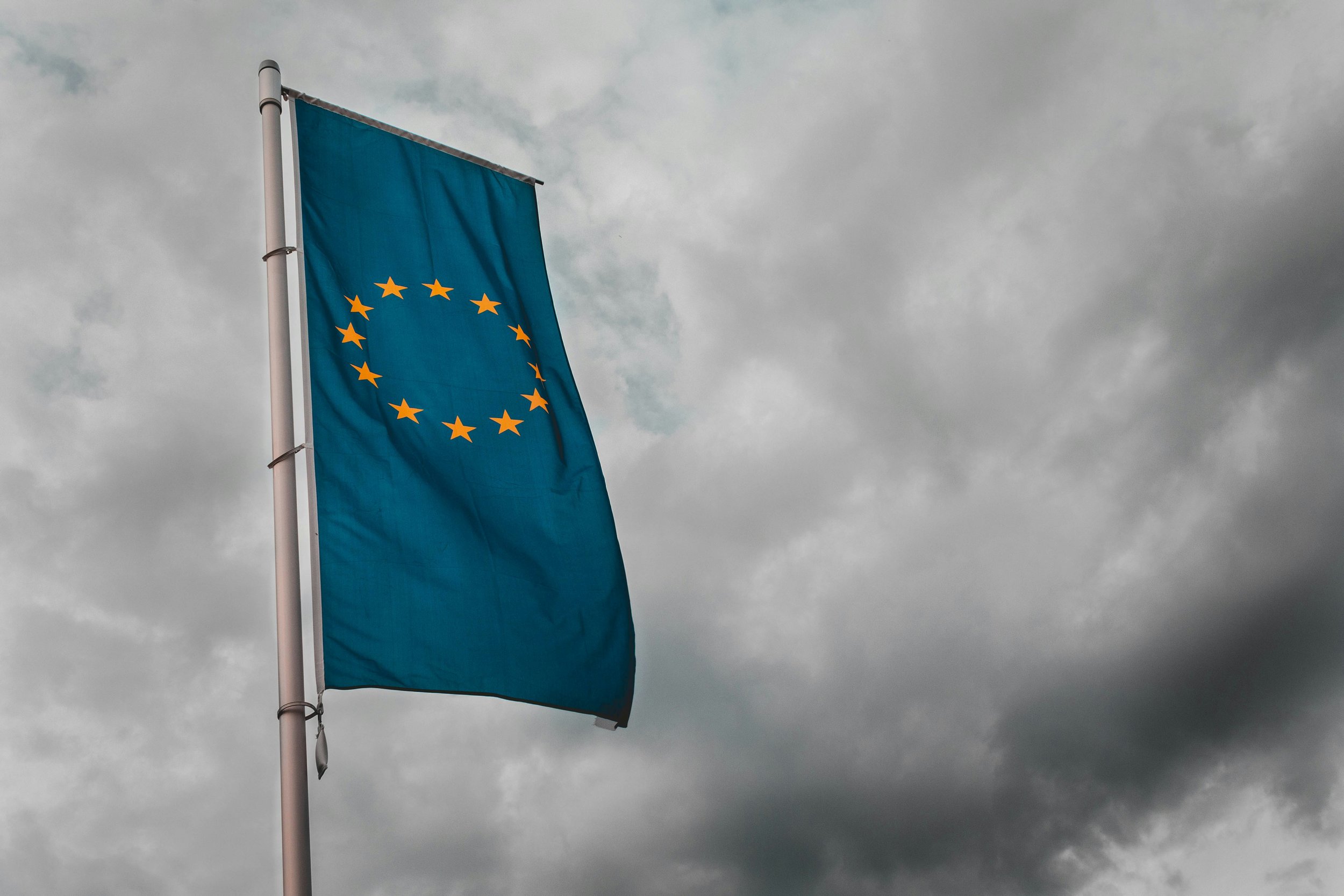
The European Union flag blowing in the wind against a dark and cloudy sky.
This potential is driven by substantial giving power- with Germany and France among the world's most affluent philanthropic markets - while the continent’s geography enables cross-border networks and knowledge-sharing in ways impossible elsewhere. The opportunity is enormous, and largely untapped.
Over the past decade, my work across Europe’s social impact sector – as a fundraiser, grantmaker, project manager, and now as an Advisor at I.G. Advisors leading our work on the European mainland – has given me a close view of both the challenges social impact professionals face in different contexts and the opportunities that are highly promising, but remain under-explored.
Based on this experience, and driven by my passion for making the European philanthropic system as strong and resilient as possible, I propose three ideas for how to better unlock its potential going forward.
1. Treat fundraising and grant-making as more than technical skills.
Too often, fundraising and grant-making are treated as purely technical disciplines. Conferences across Europe frequently focus on questions such as, “How do I write a successful proposal?” or “How can I research donors effectively?” These skills matter - but they are only part of the picture.
Sustainable impact also depends on relationships, strategy, innovative donor programmes, and values-aligned leadership. Fundraising and grantmaking should be recognised as strategic, contextual, and creative disciplines - strengthening existing processes while leaving room for experimentation and visioning.
In 2026, these disciplines should be celebrated not just as technical know-how but as essential tools for shaping the future of philanthropy.
2. Learn across borders - not just within them.
While the challenges facing philanthropy are global, the approaches are not. European countries each have distinct philanthropic cultures, offering opportunities to learn and innovate.
Campaign design, donor engagement, and methods for measuring impact vary significantly between the UK, Germany, Italy, and Sweden, for example. Looking beyond one’s own context can spark fresh ideas.
Consider British major donor programmes, such as those at The Great Ormond Street Hospital Charity, the collaboration-focused work of the Gender Funders Co-Lab, based in Spain, or the participatory grantmaking models pioneered by FundAction in the Netherlands. These examples show how philanthropy can be more innovative, inclusive, and bold. While staying grounded in the specificities of regional contexts is important, learning from different European contexts can help rethink what is possible across the continent.
3. Invest in community.
Many social impact professionals tell us they feel isolated, navigating political headwinds, funding cuts, and global uncertainty alone. Yet the truth is this: without community, sustainable solutions rarely emerge, and long-term visions for progressive, future-oriented and impactful philanthropy are even harder to sustain.
Investing in connections is crucial. Community provides solidarity, shared learning, and the chance to test and amplify what works (and what doesn’t). It also offers a counterbalance to populist narratives and fragmentation.
Our LinkedIn group, Funding Europe’s Future, does exactly that: It brings together social impact professionals from across Europe to share experiences, explore ideas, and learn from one another - or simply grab a virtual coffee to connect.
White letters on the European Union flag background reading “Stronger Together: Funding Europe’s Future.”
It’s easier said than done, but 2026 can be the year European philanthropy chooses courage: the courage to innovate, think differently, exchange ideas in the spirit of learning, and build meaningful community.
This year will almost certainly remain challenging. The social impact sector will be tested, and financial resources will remain scarce. That much is beyond our control. What is within our control is how one of the world’s most affluent philanthropic markets responds to the challenges it faces – and how it makes the most of the resources that do remain available: time, connections, learning, knowledge, and creativity.
My mission going forward is to help build the infrastructure needed to support this work – through brainstorms with actors across the sector, networking opportunities, knowledge-sharing, and the development of resilient strategies for clients and for the sector as a whole. Let’s work together to ensure European philanthropy steps boldly into a future defined by courage, not fear.
